Logo for The Optispan Podcast with Matt Kaeberlein, featuring a geometric icon with shades of blue and black text on a light background.

Longevity insights for the decades ahead.

We believe that everyone can reclaim their lost decade and extend their healthspan. Join us on this journey, subscribe to the channel, and start applying the science of longevity to your life.

The Optispan Podcast delivers leading-edge insights from the forefront of geroscience and longevity medicine. Hosted by renowned scientist Matt Kaeberlein, each episode breaks down the latest breakthroughs in aging biology, disease prevention, and health optimization—giving you the tools to take control of your healthspan.

Each episode features conversations with leading scientists, physicians, and longevity experts, covering topics such as:

✔ The latest research on reversing biological aging
✔ How biomarkers can predict and prevent chronic disease
✔ Personalized strategies to optimize your metabolism, cognitive function, and vitality
✔ The real science behind popular longevity trends—what works and what doesn’t

New to The Optispan Podcast? Start here!

Have a question for the Optispan Podcast?

All Episodes

Skip to Videos
  • Optispan Success Story: What 18 Months of Real Biomarker Data Actually Looks Like with Carlos Pinto
    | 3/12/26

    Optispan Success Story: What 18 Months of Real Biomarker Data Actually Looks Like with Carlos Pinto

    What does over 18 months of precision medicine actually look like in practice? In this episode of the Optispan Success Story Series, Dr. Matt Kaeberlein sits down with Carlos Pinto, a tech executive and early Optispan client, to trace his longitudinal health journey from metabolic warning signs to measurable, sustained transformation. Carlos shares how a decade of overlooked biomarkers, a post-pandemic health decline, and a single panic attack became the catalyst for a data-driven approach to his own biology. Together, he and Dr. Kaeberlein review real DEXA, lipid, metabolic, and environmental biomarker data, unpacking what moved the needle, what didn't, and why the answer was rarely simple. This conversation is a candid look at what it means to become your own best health advocate, not through quick fixes, but through personalized, longitudinal learning.

  • Optispan Success Story: How I Got Strong Without Living at the Gym

    Optispan Success Story: How I Got Strong Without Living at the Gym

    Matt Kaeberlein welcomes Shannon Anderson to Optispan HQ for the first episode in a new series focused on individual health journeys. Shannon describes how, for most of her life, she equated “good health” with looking good, until her body’s real condition started showing up as declining physical capacity, slower thinking, and reduced resilience. The conversation frames her story as a shift from appearance-driven habits to a performance- and longevity-driven approach built on measurable inputs and sustainable routines.

    Shannon traces the origins of that mindset to a tumultuous adolescence and years of disordered eating and body image distress, where bingeing and purging felt like a “solution” to emotional turmoil and social pressure. She and Matt unpack how pop culture ideals across decades—from the Jane Fonda era to modern influencer culture—can normalize unhealthy behaviors under the label of “wellness,” creating the same old dynamics in new packaging. Their shared point is that surface-level aesthetics can mask significant underlying dysfunction, especially when extreme dieting, overtraining, or “hacks” become the goal.

    The turning point arrives as Shannon describes aging as an unexpected gift: eventually the inside started to show on the outside, and the cosmetic “paint over the wall” approach stopped working. Around 2020, she noticed her body wasn’t performing in basic day-to-day tasks, her brain felt like it was slowing down, and strength training wasn’t producing results despite effort. That frustration forced a more honest definition of health—one rooted in function, cognition, and capability—while still acknowledging that confidence and appearance matter, just not as a substitute for physiology.

    From there, Shannon lays out what actually moved the needle: consistent resistance training three times per week for roughly three hours total, optimized for efficiency and safety, plus a practical system for finding the right trainer by treating it like a hiring decision and interviewing against clear criteria. She details nutrition principles centered on hitting protein targets, prioritizing fiber as a proxy for higher-quality carbohydrates, keeping sugar capped, and making whole-food meals easy through preparation and “always-ready” options. The episode also highlights the value of objective health data—DEXA changes in lean mass and body fat, a sleep study revealing significant sleep apnea, and ongoing biomarker monitoring that caught a mid-year slump when stress-driven eating choices pulled her markers in the wrong direction.

    Hormone therapy becomes a central theme in Shannon’s transformation, particularly the combined impact of estrogen and testosterone on strength, body composition, sexual health, and cognitive clarity, while also acknowledging tradeoffs and side effects and the importance of medical oversight. She emphasizes that exercise and diet alone may not fully work as expected when hormones are severely dysregulated, but that hormones without disciplined training, nutrition, and sleep are not a complete solution either; the leverage comes from stacking fundamentals. The closing message is simple: health works from the inside out—when the internal systems are supported, confidence and appearance tend to follow—and the long game is preserving function for the years that matter most, including relationships, retirement, and the ability to keep saying “yes” to an active life.

  • I'm Taking TESTOSTERONE: My Story, Mistakes & Insights From a Longevity Perspective
  • My Biggest Health & Longevity Breakthroughs at 54
    | 2/27/25

    My Biggest Health & Longevity Breakthroughs at 54

    In this special birthday edition of the Optispan Podcast, host Matt reflects on his personal health and longevity journey as he turns 54. He shares the major lifestyle, dietary, and medical interventions that have had the biggest impact on his biological age and overall health over the past decade. Matt opens up about how leaving academia, reducing alcohol consumption, and optimizing hormone therapy have been transformative changes, significantly improving his quality of life, physical health, and stress levels.

    A central theme of the episode is the outsized role of resistance training and consistent exercise in preserving body composition and function. Matt details how his five-year journey with strength training has paid off, especially once paired with nutritional optimization and hormonal support. He also explains his cardio routine, which is more casual and centered on enjoyment rather than strict structure, showing that flexibility can still yield health benefits when combined with consistency.

    Matt offers a detailed look into his nutritional evolution—from experimenting with keto to now following a high-protein, high-fiber, whole-foods-based approach. He emphasizes practical tips like eliminating added sugars, reading food labels, and embracing healthy substitutions such as keto bread and no-sugar yogurts. His strategy focuses on sustainability over perfection, including occasional use of processed foods like protein bars without letting them dominate his diet.

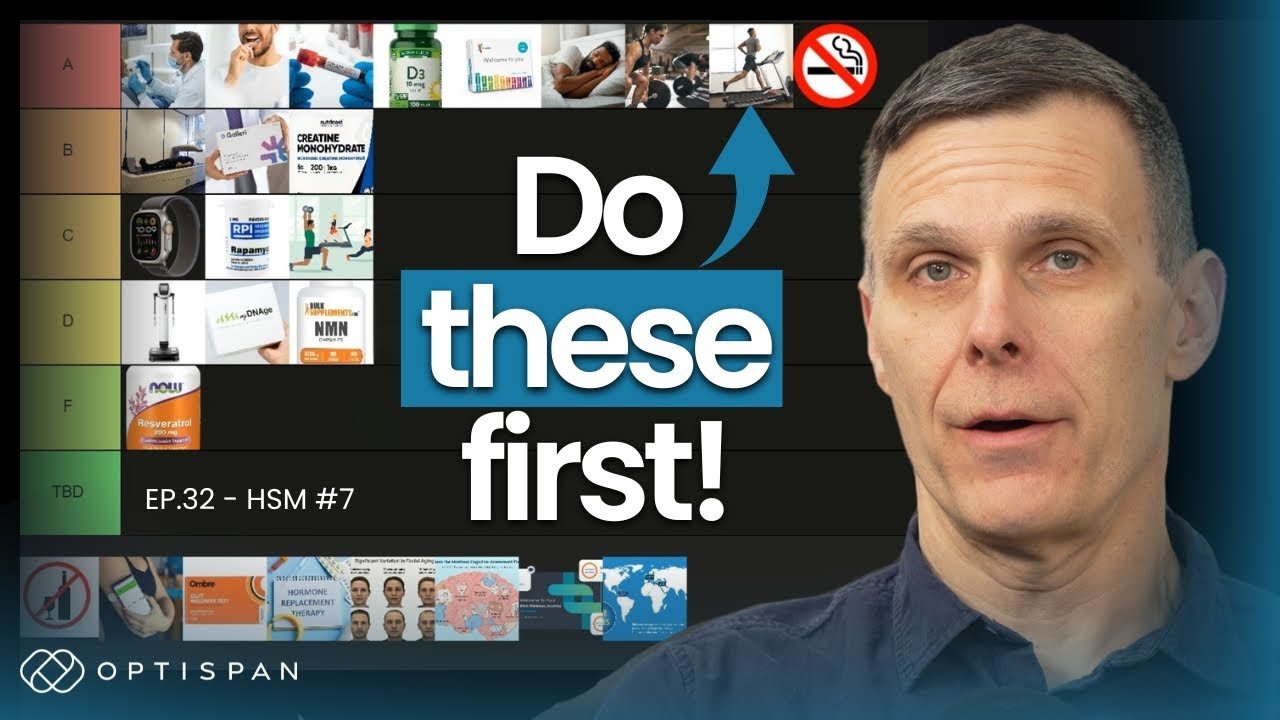
    He also categorizes interventions into tiers based on their perceived impact. High-impact tools include comprehensive diagnostics, tracking biomarkers, and working with a preventative medicine physician. In a secondary tier, he places rapamycin, creatine, and continuous glucose monitoring, which have provided value, though not on the same scale. Lower-tier or neutral-impact interventions include urolithin A, NR, DHEA, boron, and biological age/microbiome tests, which he found either ineffective or not actionable for his personal health.

    The episode concludes with a powerful reminder of the role of relationships in long-term health. Matt credits his marriage and close personal connections as the most important contributors to his well-being. Looking forward, he shares plans to experiment with the TRIM protocol (targeting thymic regeneration) and the CLEARLY coronary imaging test. His overarching message is that aging should be proactive, not passive, and that it’s possible to be in better shape at 64 than 54—if you put in the effort and remain curious, consistent, and optimistic.

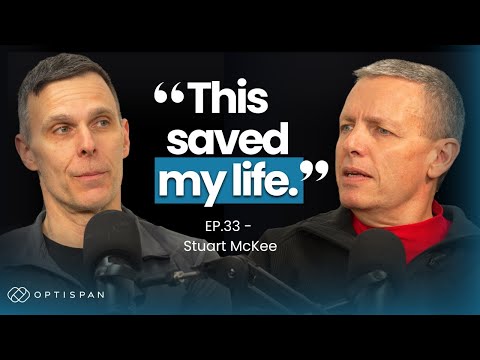
  • WELLNESS REVOLUTION: Taking Accountability to Achieve a Health Transformation | 33 - Stuart McKee
    | 5/16/24

    WELLNESS REVOLUTION: Taking Accountability to Achieve a Health Transformation | 33 - Stuart McKee

    The journey towards prioritizing one's healthspan can be a circuitous path full of triumphs, setbacks and lessons. Challenges arise and old habits rear their ugly heads. Unforeseen obstacles test our resolve. The road is rarely linear and often leads us to unexpected places.

    In this episode, Matt chats with former Microsoft Chief Technology Officer and one of our first Optispan Trailblazers Stuart McKee about Stuart's early forays into drugs, smoking, and alcohol consumption, how he stepped off the train to get his health (and life) in order, and how the healthcare system can shape our attitude to healthspan optimization, for better or for worse. Stuart shares his meticulous approach to finding the right primary care doctor, strategies for weight loss from an obese baseline, and experiences with clomid therapy. They also discuss the influence of mindset and external influence on our healthspan optimization trajectories.

    Stuart is currently a Strategic Advisor to the software company Armada, where he collaborates with the executive team to identify opportunities, innovative solutions, and market priorities to drive awareness and growth for the company. He also serves as a substitute teacher for Washington's Northshore School District. He was previously Chief Operating Officer at the artificial intelligence and spatial analytics company Hayden AI and Chief Executive Officer of Optispan Geroscience LLC, a precursor to Optispan as it exists today. Stuart spent 16 years at Microsoft.

    Check out the links below for further information and/or reading about some of the things we discussed in this podcast episode. Note that we do not necessarily endorse or agree with the content of these readings, but present them as supplementary material that may deepen your understanding of the topic after you listen to our podcast. This list is in no way exhaustive, but it’s a good start!

    Why is it so challenging to find a primary care physician?

    In the podcast, Stuart describes his selective search for the right primary care doctor. This blogpost details some of the reasons it may be hard to find a primary care provider: fewer people in the profession, high burnout rates, and challenges beyond the primary care provider's control, among others.

    How to practically change your behaviors | Peter Attia & James Clear

    This snippet of the Peter Attia Drive podcast features New York Times bestselling author James Clear, who wrote the book "Atomic Habits". Clear suggests focusing on displacing bad habits with better ones, and describes how it can sometimes take removing oneself from old environments to do this ("environment is like a form of gravity...it just pulls on you").

    Ultra-Processed Diets Cause Excess Calorie Intake and Weight Gain: An Inpatient Randomized Controlled Trial of Ad Libitum Food Intake

    Ultra-processed foods such as cereals, breads, and packaged snacks—the foods one often finds in the middle aisles at the grocery store—may be to blame for a lot of the American obesity crisis and make up a big part of the "obesogenic environment" Stuart mentions in this episode. This study compared a group of adults receiving ultra-processed foods to a group receiving unprocessed foods. The group on the ultra-processed diet consumed more calories and gained more weight than the group on the unprocessed diet, despite both groups' meals being matched for calories, energy density, macronutrients, sugar, sodium, and fiber.


    Effects of Testosterone Treatment in Older Men

    This study found that a year-long course of testosterone treatment had moderate benefits on sexual function and mood in men over 65 years of age. The trial found no significant effects on physical function (as measured by six-minute walking distance) or vitality (as assessed by a scale measuring fatigue during daily activities). Testosterone therapy is still relatively poorly-understood and needs further study.